ENGINEERING STUDIES & VALIDATION
Mechanical analysis, numerical simulations and technical validation to secure your industrial developments.
Our engineering consultancy supports industrial companies in the analysis, calculation and technical validation of products, subassemblies and mechanical systems, to ensure reliable design choices before prototyping and industrialization.
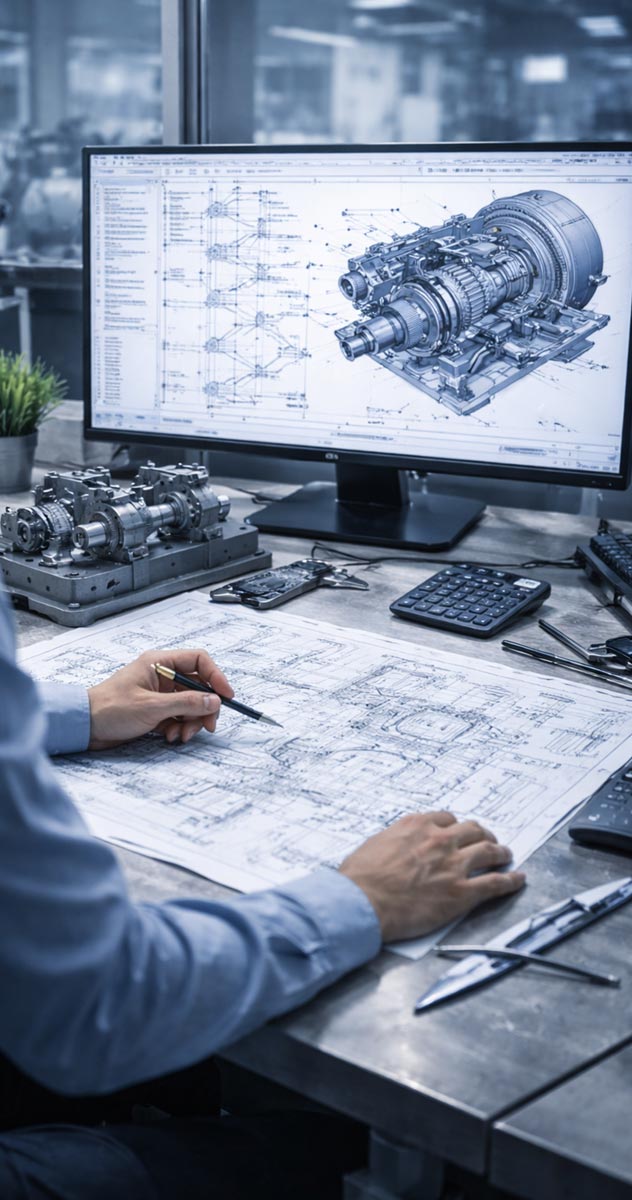
Functional analysis and engineering studies
Functional analysis and engineering studies
Before any in-depth technical validation, it is essential to clearly understand the exact need the system must meet. This functional analysis phase helps identify the expected functions, operating conditions, interactions between subassemblies and constraints related to the industrial environment. It provides an essential foundation for properly guiding the engineering work, avoiding approximate interpretations of the specifications and establishing a clear technical framework from the very start of the project.
Engineering studies then structure this initial analysis by translating the identified needs into usable data for industrial mechanical engineering in Saint-Étienne. This involves characterizing loads, movements, interfaces, dimensional constraints, assembly conditions, maintenance requirements and safety considerations. This stage makes it possible to objectify technical choices, better identify the sensitive points of the system and anticipate potential difficulties before moving on to more advanced development phases.
At UCUETIS, this upstream approach helps secure projects from their earliest stages through a rigorous method adapted to industrial realities. Analysing usage conditions, operating constraints and available data makes it easier to identify technically consistent solutions and better prioritize the project’s main objectives. This preparatory work improves the overall readability of the system and reduces the risk of errors or inconsistencies in the next engineering phases.
By establishing strong functional and technical foundations, the engineering consultancy efficiently prepares the following stages of development. Calculations, simulations, validations and technical documentation can then rely on a clearer, more reliable and more coherent framework. This analysis phase therefore plays a key role in securing engineering decisions, improving project quality and facilitating coordination between the different stakeholders involved in its development.
Mechanical calculations and numerical simulations
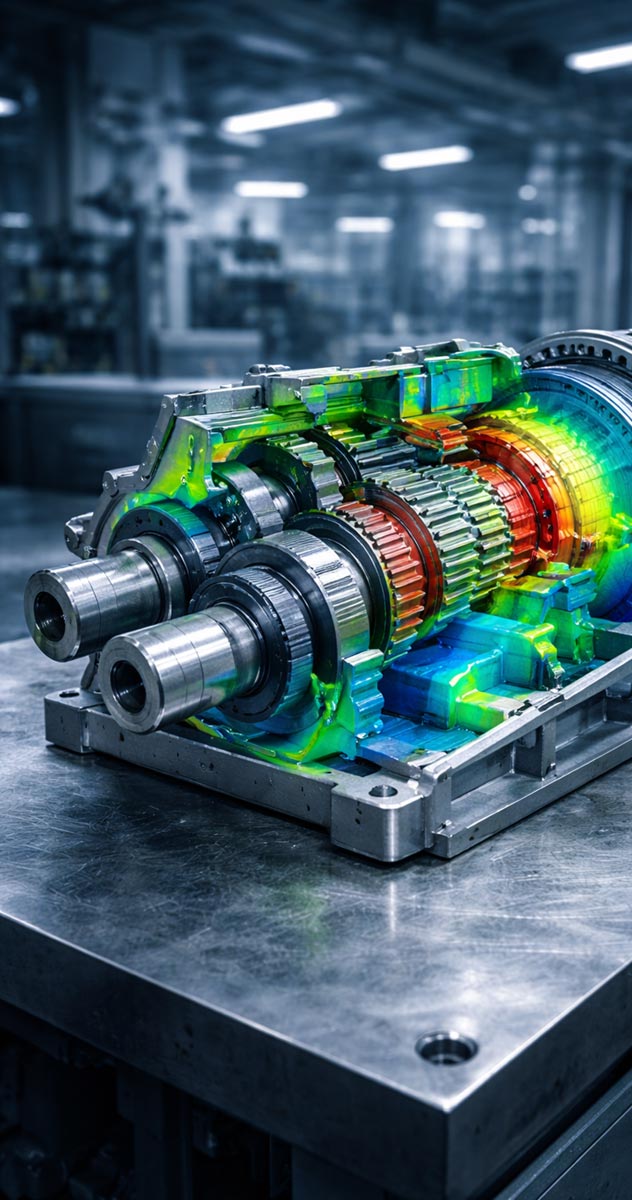
In many industrial projects, it is essential to accurately verify the behaviour of parts and mechanical assemblies before any manufacturing phase begins. Mechanical calculations make it possible to assess the loads, stresses and deformations likely to occur during the operation of equipment or systems. This technical analysis is a key step in ensuring that the components under study will withstand the expected demands and perform reliably over time.
Modern numerical simulation tools now make it possible to anticipate the mechanical behaviour of a product long before a physical prototype is built. Thanks to digital models, it becomes possible to analyse different operating scenarios, test multiple design variants and identify the critical areas most exposed to significant stresses. This approach provides a much more accurate understanding of the overall behaviour of a system and supports safer technical decisions.
Simulations also make it easier to study complex phenomena that would be difficult to observe directly during the early stages of development. In particular, they help analyse deformations, stress concentrations, thermal effects and repeated load cycles that may occur under certain operating conditions. By reproducing these situations virtually, it becomes possible to identify sensitive areas within the system and introduce design adjustments aimed at improving the reliability of the components being studied.
By integrating these analyses from the early stages of engineering, the consultancy secures technical decisions and reduces project uncertainty. The results obtained help confirm design choices and prepare the next development steps more confidently before prototyping and industrialization. This approach also improves the overall consistency of the project and limits late corrective actions during final adjustment phases.
Technical validation and optimization
Technical validation is a key stage in confirming the consistency of design choices before moving on to prototyping or manufacturing phases. Based on the results of analyses and simulations, the engineering consultancy verifies the ability of the selected solutions to meet the project’s functional, mechanical and industrial requirements. This process ensures that the whole system will operate reliably under the expected conditions and meet the technical specifications. It also serves as an essential checkpoint to consolidate the decisions made during the earlier study phases.
This validation phase also involves analysing safety margins, operating tolerances and interactions between the various system components. By comparing theoretical results with actual operating constraints, the consultancy can identify the adjustments required to ensure the robustness and stability of the design. The objective is to strengthen technical choices before moving on to the next stages of development. This critical review of the results also helps prioritize the most sensitive aspects of the system and limit unfavourable technical compromises.
The studies carried out also make it possible to initiate an optimization process for the product or equipment under review. By adjusting certain design parameters, it becomes possible to improve reliability, reduce mechanical stresses or optimize load distribution within the system. This approach contributes to strengthening the overall quality of the project while limiting technical risks. It also helps support more effective trade-offs between performance, durability, ease of manufacture and control of development costs.
By validating and optimizing technical solutions upstream, the engineering consultancy prepares the following stages of industrial development more efficiently. Decisions are based on structured analyses and verified data, helping reduce uncertainty and approach prototyping, industrialization and production phases with greater confidence.

Testing and final validation
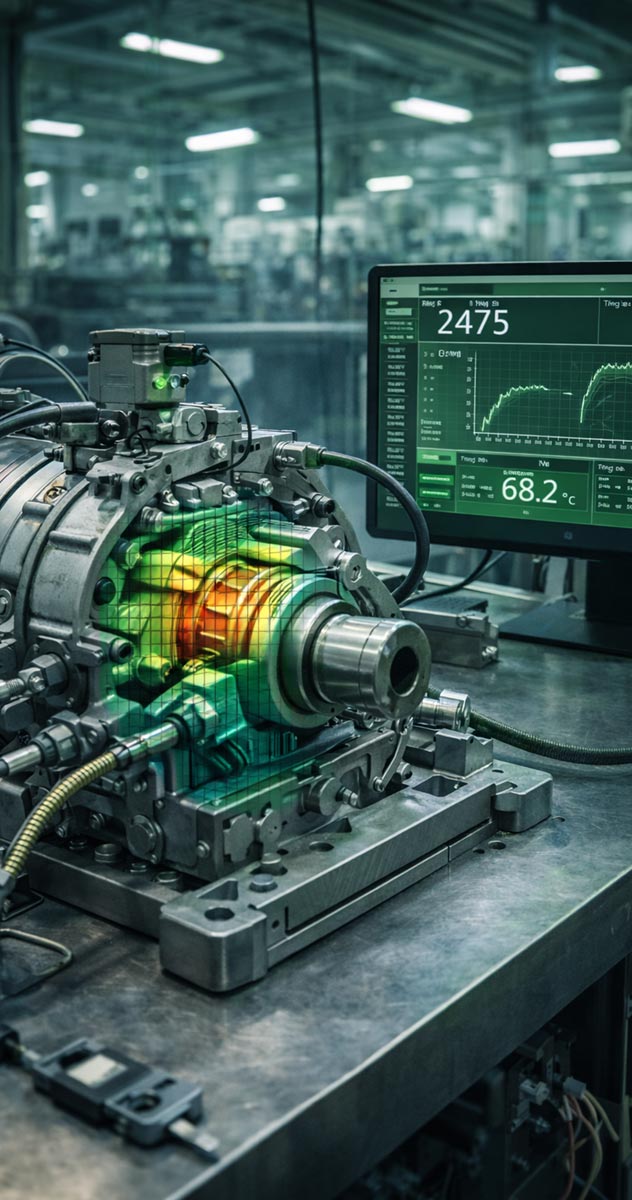
Before production launch, a phase of testing and final validation is used to confirm that the product or equipment complies with the requirements set out in the specifications. This step aims to verify the actual behaviour of the selected technical solutions and ensure that the expected performance is achieved under representative operating conditions. It also helps validate the consistency between design decisions, prior simulation results and the real operating constraints of the project.
The tests carried out may concern different aspects of the system, such as mechanical strength, functional tolerances, interactions between components or behaviour under load conditions. These checks help identify any necessary adjustments before industrialization and limit technical risks when moving into production. They also provide a practical understanding of the available safety margins and highlight the points requiring particular attention before final validation of the whole system.
When necessary, targeted improvements can be implemented to optimize certain operating parameters or reinforce the product’s overall robustness. The objective is to guarantee a high level of reliability while maintaining the technical consistency of the design choices made during previous stages. This phase also helps consolidate trade-offs between performance, durability, ease of manufacture and control of industrial constraints before full production commitment.
This final validation therefore represents an essential step in securing production launch and ensuring the overall quality of the project. It makes it possible to approach industrialization with a high level of confidence and to ensure that the developed solutions will sustainably meet the technical and industrial requirements defined upstream. Based on verified results and structured analysis, the engineering consultancy secures the transition between development, prototyping and mass production.
FAQ – Engineering studies and technical validation
Tip: click on a question to display the answer.
Let’s discuss your mechanical or industrial project.
UCUETIS
Mechanical engineering in Saint-Étienne.
Design to Manufacturing approach:
design, industrialization and optimization,
with a production-oriented methodology.
CONTACT
UCUETIS
370, rue de Pressomat
42560 Boisset St-Priest France
Tel. : 09 52 54 61 18
Email : contact@ucuetis-d2m.com