PROTOTYPING AND INDUSTRIAL PRODUCT DEVELOPMENT
Mechanical engineering office specialized in industrial product development and validation
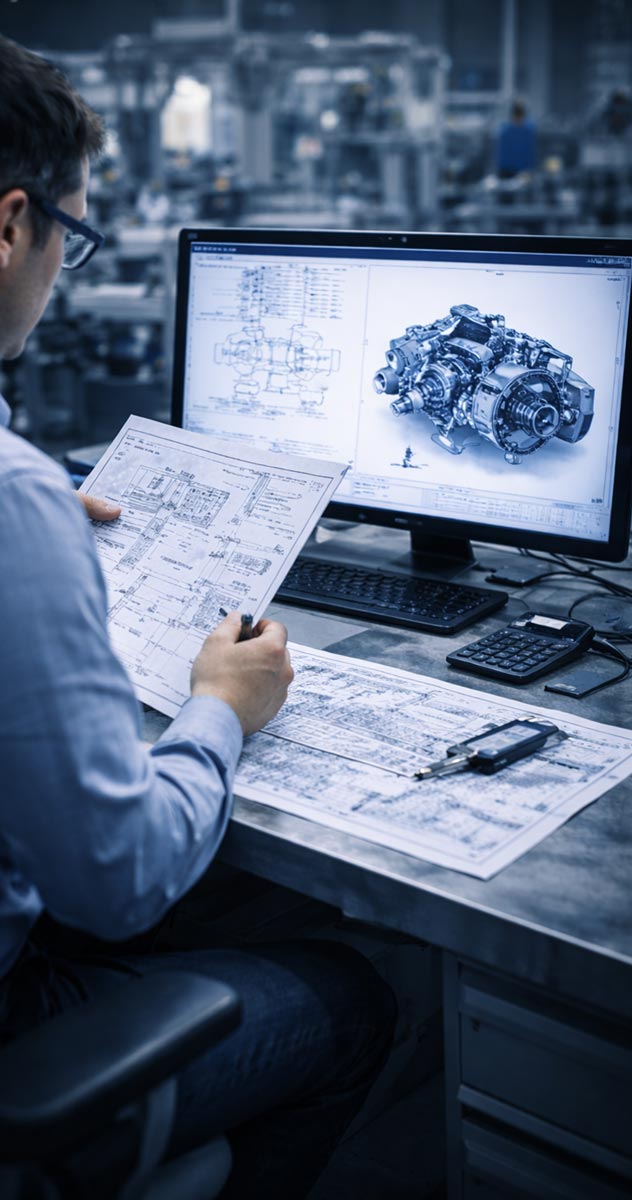
Our mechanical engineering office supports industrial companies in prototyping and technical product development, with a focus on validation, reliability and industrial performance.
Product development and feasibility study
The development of an industrial product is an essential step in transforming an idea, a functional need or a technical evolution into a concrete, coherent and usable solution. Our engineering office supports industrial companies in analyzing requirements, structuring expected functions and evaluating the technical, mechanical and integration constraints associated with the project. This phase makes it possible to establish solid foundations to guide the project toward a realistic solution, consistent with the technical objectives and compatible with the requirements of future product development.
The feasibility study is based on the analysis of operating conditions, expected performance, space constraints, technical interfaces and industrial limitations of the project. The objective is to identify possible solutions, validate the most relevant technical orientations and anticipate potential difficulties during development. This approach helps secure initial decisions, reduce uncertainties and improve the overall reliability of product development before moving on to prototyping phases, while preparing a clearer technical framework for the next stages of the project.
Our engineers also contribute to defining the product’s technical architecture, selecting the mechanical principles to be retained and evaluating trade-offs between performance, robustness, feasibility and cost. This phase allows the project to be structured coherently, technical priorities to be clarified and future design and realization stages to be prepared effectively. It also helps reduce uncertainties, stabilize the main technical choices and build a more reliable working framework for fine-tuning and validation phases.
By integrating functional analysis and feasibility constraints at an early stage, our engineering office helps industrial companies secure the launch of their industrial prototyping projects in Saint-Étienne. This approach makes it possible to guide development toward viable solutions, anticipate necessary adjustments and ensure a smoother transition between the initial study, technical design and realization of the prototype, while preparing the technical conditions for future validation and product optimization phases.
Mechanical prototyping and technical fine-tuning
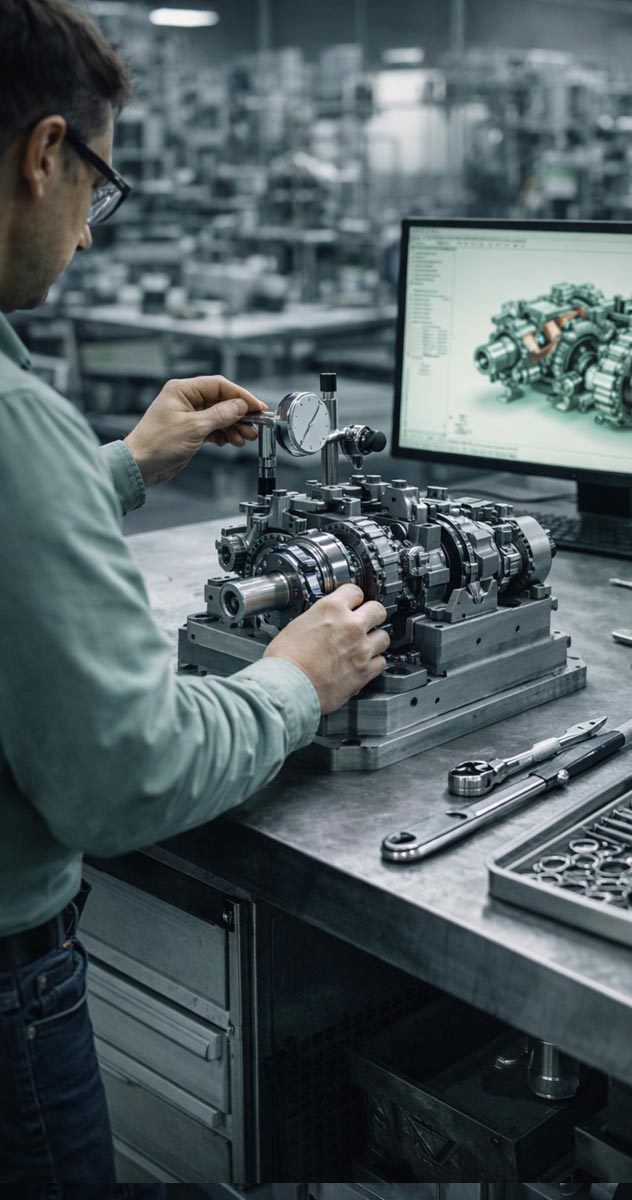
The mechanical prototyping phase is a key step in the development of an industrial product. It makes it possible to materialize the initial technical orientations by creating a functional model intended to validate mechanical principles, interfaces between components and the overall behavior of the system. This stage gives industrial companies the opportunity to observe the product’s operation in practical conditions, identify possible technical limitations and refine the choices made during the first development studies.
The realization of a mechanical prototype also makes it possible to confront the design with real constraints related to assembly, ergonomics and integration within the industrial environment. Engineers can analyze the behavior of sub-assemblies, verify functional clearances, adjust certain geometries and improve the overall consistency of the product. This progressive approach helps limit technical uncertainties, secure the main mechanical choices and optimize the design before moving toward more advanced manufacturing or validation phases.
Our engineering office supports industrial companies in defining the most appropriate technical solutions for prototype production, whether for individual parts, mechanical sub-assemblies or more complex systems. The objective is to ensure a sufficient level of precision to faithfully reproduce the operating conditions of the future product and facilitate technical analysis during the fine-tuning phases. This approach makes it possible to work on a realistic technical basis, closer to the future use of the product.
The technical fine-tuning phases then make it possible to adjust product parameters, improve certain performances and correct any discrepancies observed during initial tests. This stage contributes to strengthening system reliability, refining mechanical choices and preparing the following validation and optimization phases before industrialization. It also makes it possible to identify more precisely the improvements required to achieve a more stable, more efficient technical solution, better adapted to real operating constraints.
Prototype testing and validation
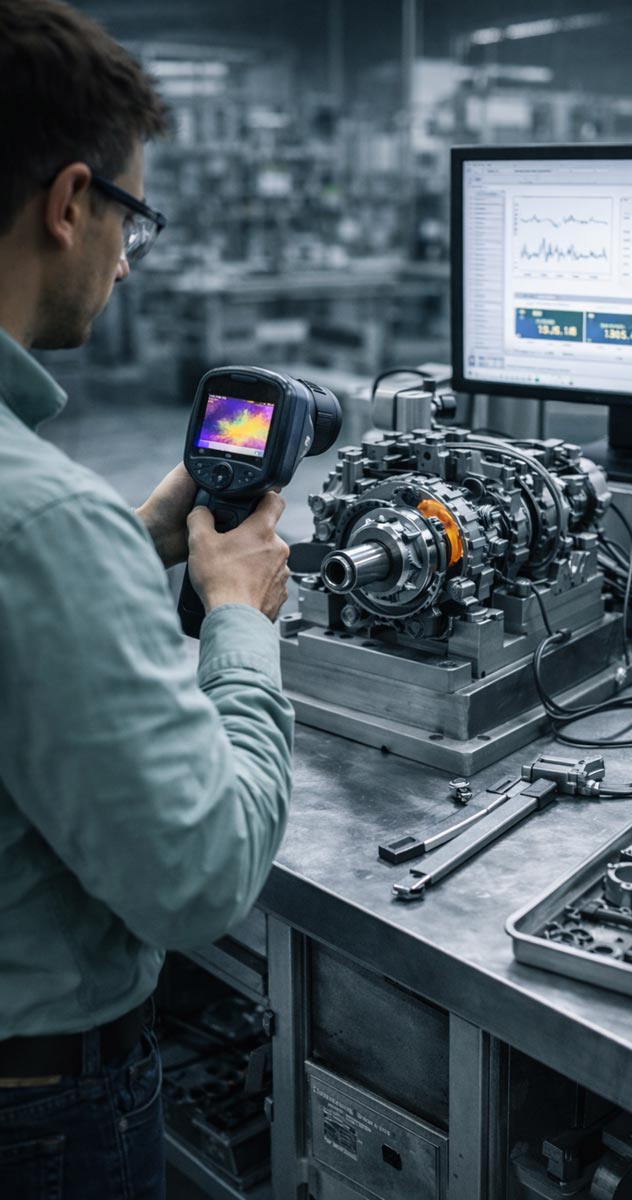
The phases of prototype testing and validation constitute a decisive step in the development of an industrial product. They make it possible to confront the designed solution with real operating conditions and verify its overall behavior in practice. This approach allows industrial companies to observe the functioning of the system, identify potential technical limitations and validate the choices made during the design and mechanical prototyping phases, before moving toward further adjustments or industrial preparation.
Tests may focus on different aspects of the product: mechanical operation, component resistance, interactions between sub-assemblies or user ergonomics. The objective is to measure the actual performance of the prototype and verify its compliance with the requirements defined upstream of the project. This phase makes it possible to detect any discrepancies, identify areas for improvement and secure the overall reliability of the system before moving on to subsequent development stages.
Our engineering office supports industrial companies in analyzing the results obtained during testing and in implementing the necessary adjustments. Feedback from experimentation helps refine technical choices, correct certain configurations and improve the overall consistency of the product. This iterative approach contributes to strengthening the robustness of the prototype and preparing a more advanced version of the system, by integrating the lessons learned from real operating conditions.
By integrating these validation phases into the development process, our engineering office helps secure the transition between the prototype and product optimization stages. This approach contributes to limiting technical uncertainties, reducing the risk of failure during production launch and ensuring a smoother transition toward industrialization phases. It also allows the next stages of the project to be approached with a validated, more reliable solution, better suited to the operational constraints of prototype validation.
Product optimization before industrialization
Product optimization is the final development stage before transitioning to industrialization. It allows the design to be adjusted based on lessons learned from tests, technical validations and observations made on the prototype. This phase aims to improve the overall consistency of the system, strengthen its robustness and prepare a more stable version of the product for future manufacturing. It also helps consolidate technical choices before entering the final stages of industrial preparation.
Optimizations may concern different aspects of the product: geometries, mechanical interfaces, assemblies, tolerances or functional behavior. The objective is to identify the most relevant improvements in order to make the design more reliable and limit the risk of defects or rework during the following stages. This approach contributes to building a more advanced, more coherent product, better suited to industrial requirements, while preparing more stable and better-controlled manufacturing conditions for the rest of the project.
Our engineering office supports industrial companies in analyzing the adjustments to be implemented in order to strengthen the technical quality of the product before manufacturing. This phase makes it possible to consolidate the selected choices, better control trade-offs between performance, feasibility and cost, and prepare a more stable technical framework for the next stages of the project. It directly contributes to effective product optimization within a controlled industrial development process.
By intervening before the launch of production phases, this approach helps secure the transition between the validated prototype and the future industrialization of the product. It allows industrial companies to benefit from a more reliable solution, better prepared and more consistent with the technical, economic and operational constraints of their manufacturing environment, while limiting late adjustments during industrial start-up. This stage helps make the transition toward a final product version ready for manufacturing more reliable.
FAQ – Prototyping and industrial product development
Tip: click on a question to display the answer.
Let’s discuss your mechanical or industrial project.
UCUETIS
Mechanical engineering in Saint-Étienne.
Design to Manufacturing approach:
design, industrialization and optimization,
with a production-oriented methodology.
CONTACT
UCUETIS
370, rue de Pressomat
42560 Boisset St-Priest France
Tel. : 09 52 54 61 18
Email : contact@ucuetis-d2m.com